



Your morning briefing on sub-Saharan Africa
The most important developments in sub-Saharan Africa. Six days a week.
Read the latest brief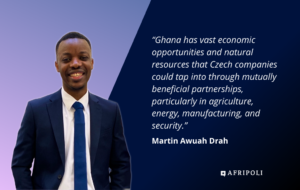
From studies to solar projects: Martin connecting Ghana and Czechia
From Ghana to Brno and now helping deploy solar tech back home — Mawuli Awuah Drah has quite a story. As Afripoli’s Energy Analyst, he’s swapped lecture halls for real-world

Reform Momentum in Senegal Sparks Investor Anxiety
Senegal is undergoing substantial governance reforms under newly elected President Bassirou Diomaye Faye, following the April 2024 political transition that concluded President Macky Sall’s twelve-year administration (2012–2024). While supported domestically,
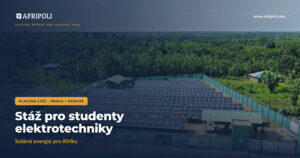
Placená stáž pro elektrotechniky, kteří rádi staví: solární čerpání vody a zavlažování pro Afriku
Raději než o fotovoltaice čteš, zapojuješ ji? V Afripoli nabízíme možnost placené stáže studentům elektrotechniky a energetiky, kteří si rádi sáhnou na hardware. Budeš stavět a testovat jednoduchá solární řešení
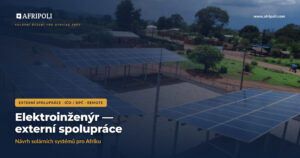
Externí elektroinženýr/ka: návrh solárních systémů pro Afriku
Máte zkušenosti s návrhem fotovoltaických systémů a chcete je využít na reálných mezinárodních projektech? Afripoli hledá zkušeného elektroinženýra / elektroinženýrku na externí projektovou spolupráci. Budete navrhovat a dimenzovat off-grid i
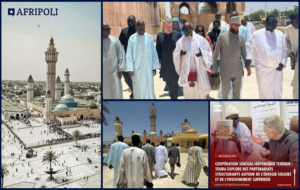
Afripoli in Touba: Practical Cooperation on Energy, Education and Local Development
Touba is the second-largest city in Senegal, the spiritual capital of the Mouride brotherhood, and one of the few places in West Africa where a city of more than a
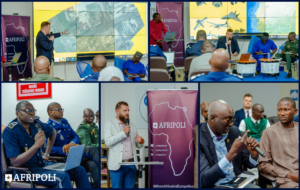
Borders Under Pressure: Security, Coordination and New Approaches to Protecting Border Areas in Africa
Border areas in West Africa and the Sahel are increasingly becoming strategic spaces where security threats, organised crime, illicit flows, migration, limited state presence and the socio-economic vulnerability of local
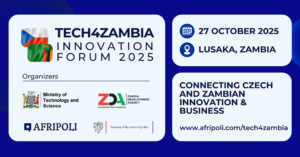
Tech4Zambia Innovation Forum 2025 to Take Place in Lusaka on 27 October
The Tech4Zambia Innovation Forum 2025 will be held on 27 October 2025 in Lusaka. The event is organized by Afripoli in collaboration with the Embassy of the Czech Republic in

Building Sustainable Partnerships: Afripoli Meets with the Municipality of Parcelles Assainies
In early July, Afripoli hosted a working meeting in Prague with a high-level delegation from Parcelles Assainies, a major district of Dakar, the capital city of Senegal in West Africa.
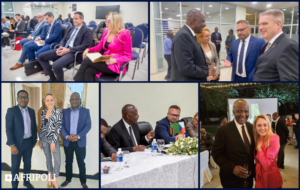
Czech Tech, African Priorities: Afripoli on the Ground in Zambia
In May, Afripoli joined the official Czech delegation to Zambia, led by Deputy Prime Minister Marian Jurečka and organized by the Confederation of Industry of the Czech Republic. As part
Afripoli’s 2024 Annual Report: A Year of Growth, Groundwork, and Global Connections
We are pleased to announce the release of Afripoli’s 2024 Annual Report — a comprehensive look at a transformative year that firmly positioned us as a trusted partner for strategic